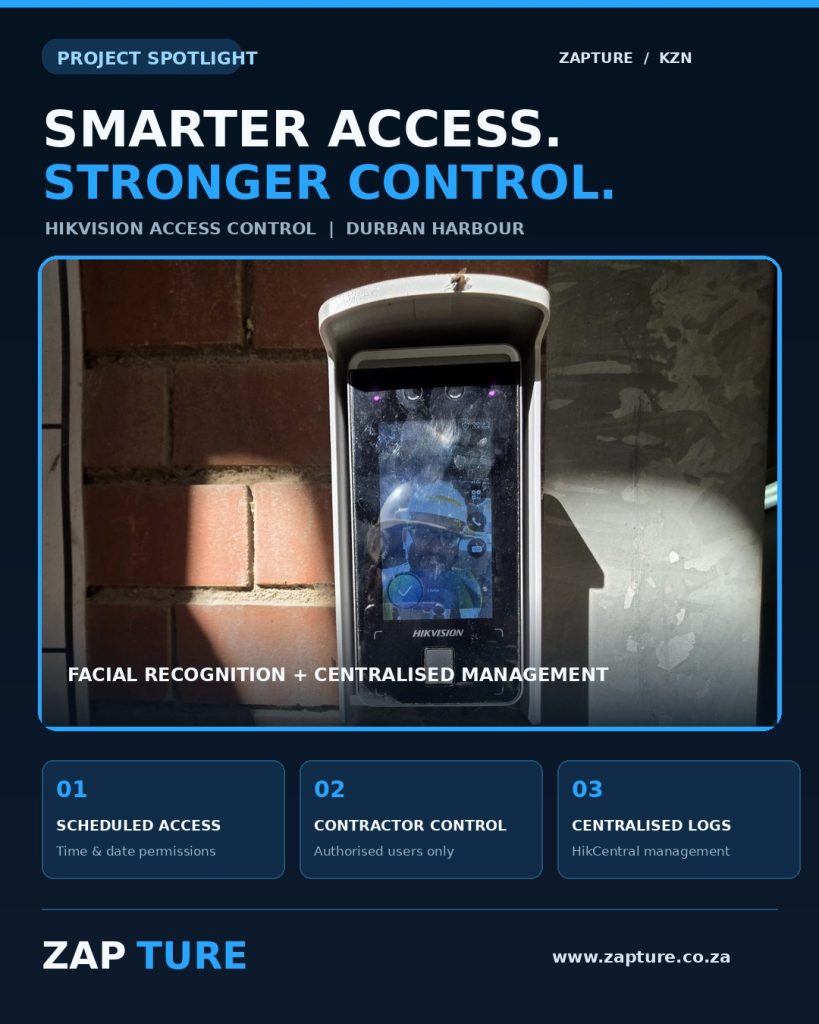
Location: Durban Harbour, KwaZulu-Natal
Service: Commercial biometric access control and centralised entry management
Technology: Hikvision facial-recognition terminals, magnetic locks and HikCentral
At an active Durban Harbour facility, giving the right people access at the right time is essential. Workers need reliable entry for their shifts, contractors may only need access during an approved period, and management needs visibility of who has entered the site. Zapture was tasked with bringing these requirements together in one coordinated access control solution.
The brief: more than just opening a door
The client’s requirement went beyond installing a biometric reader. Their team needed to control which workers and contractors could access designated areas, apply date- and time-based permissions, and keep usable records of access and clock-in activity. Just as importantly, they wanted this information brought into a centralised management platform rather than relying on isolated readers at individual entrances.
In a busy operational environment, permanent, unrestricted access for every user is not a practical approach. Different teams, shifts and contractor appointments can require different entry windows. The aim was to create a more accountable and manageable process without unnecessary delays for authorised personnel.
Our solution: Hikvision readers, maglocks and HikCentral
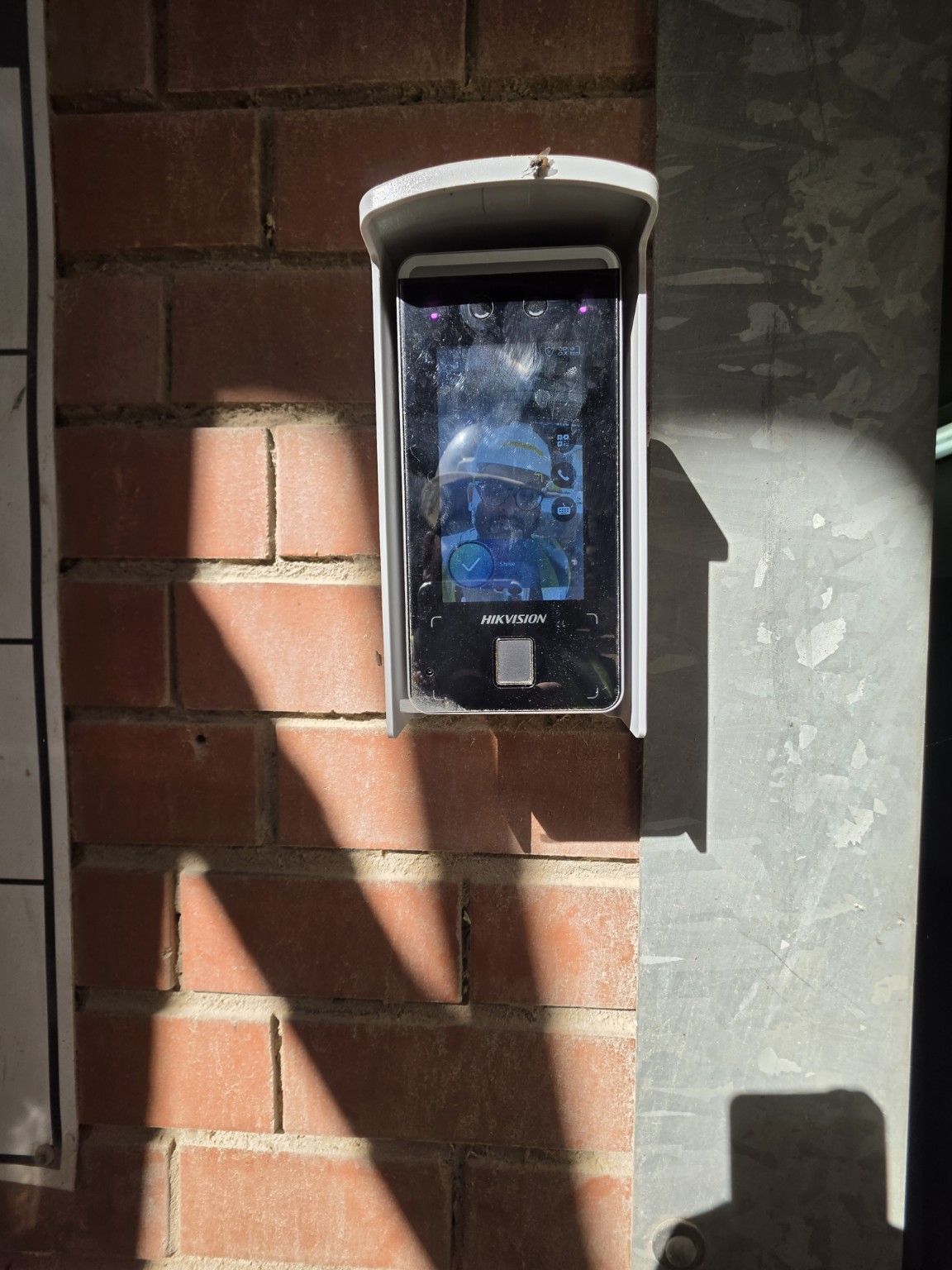
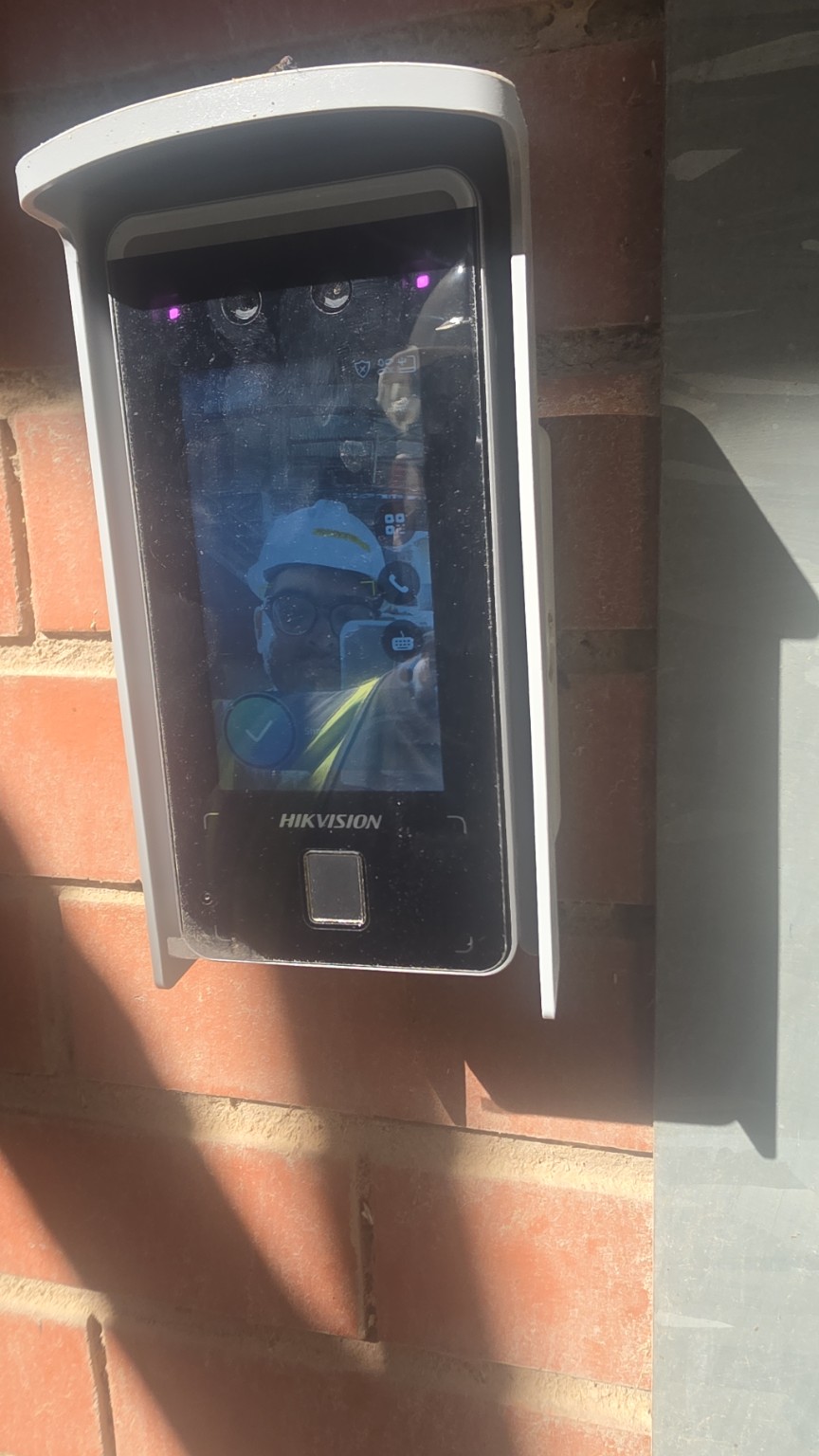
Zapture installed Hikvision facial-recognition access control readers together with magnetic door-locking hardware. The readers provide a point of identity verification, while the connected locking equipment controls entry in accordance with the authorised access arrangement. The system’s data was integrated into HikCentral to give the client a central point from which to manage access information.
1. Identity-based entry for workers and contractors
The facial-recognition readers are intended to identify approved users before an access decision is made. This creates a more controlled alternative to simply sharing keys or relying on unrestricted entry. Permissions can be managed around a person’s approved role and operational requirements.
2. Scheduled permissions by time and date
One of the client’s key priorities was being able to limit when a worker or contractor is allowed access. In a centrally managed access control environment, schedules can be defined to reflect working hours, authorised shifts and temporary access periods. This helps prevent users from retaining broader access than their duties require.
3. Centralised administration through HikCentral
We brought the reader data into the HikCentral platform so access information could be managed from a central system. For the site team, this reduces dependence on treating each entrance as a separate installation and creates a clearer framework for administering user permissions and reviewing available activity records.
4. Entry history and clock-in accountability
The solution was also selected around the client’s need to review who entered and when, with clock-in records supporting staff and contractor oversight. Event records can help management investigate attendance questions, review access activity and maintain a clearer picture of authorised site movement. The exact reporting and attendance workflow depends on how user profiles and the management software are configured.
What the business gains from centralised access control
- Better permission control: grant access based on authorised people and approved operating periods rather than leaving permissions permanently open.
- Practical contractor management: support temporary or time-limited access requirements without treating every contractor as a permanent staff member.
- Centralised visibility: bring access events and user administration into one platform for more consistent management.
- Improved accountability: retain relevant entry and clock-in records for authorised review.
- Room to expand: a centrally managed approach offers a stronger foundation for additional controlled entrances as operational needs change, subject to compatible hardware and licensing.
A note on safe installation and responsible records
Access control at industrial and commercial sites must balance security with safe exit. Door-locking arrangements need to suit the door, relevant emergency-release requirements and applicable life-safety rules. Biometric and attendance data should also be handled with appropriate access permissions, retention policies and consideration for South Africa’s POPIA requirements.
For security reasons, this case study describes the project at a functional level without publishing door-by-door configurations, user permissions or operational access schedules.
Our approach at Zapture
Whether a client needs one secure entrance or a site-wide solution, our focus is understanding how the building is used before recommending hardware and software. At Durban Harbour, the requirement was to combine biometric identification, magnetic locking, time-restricted access and centralised records in a system aligned with the client’s day-to-day operations.
Zapture supports organisations across Durban and KwaZulu-Natal with commercial access control installations, biometric readers, multi-door solutions and system integrations. Project scope and pricing are tailored to each site’s requirements.
Let’s discuss your project
A practical solution, tailored to your site and budget.